An interesting weekend, for some nicely non-birdy reasons which I'm not going to go into. Filthy weather meant ringing was out of the question, so we took a wander around Slapton and Beesands Leys with N. An easterly wind was howling through, with steady rain, yet despite this we managed to note Reed Warbler, Blackcap and Chiffchaff singing, with a Willow Warbler and plenty of vocal resident Cetti's in addition. Swallows were feeding carefully over the ley surface, with a House Martin and a handful of Sand Martins picked out from amongst them, as well as a slightly surprising Swift - first of the year for both of us. Bird of the day was a nice spring Yellow Wagtail flushed from the line, keeping company with a handful of cracking Wheatear; always a pleasure to see. Beyond that, there was little out of the ordinary, although the resident female Marsh Harrier was seen briefly before she dropped into the reeds at the back of Stokeley bay - perhaps trying to end it all in the face of the conditions: I wouldn't blame her!
Some of my Philippines photos are now up on www.jerbarker.co.uk so feel free to have a look. A first-draft trip report is also on there, though there will need to be some changes and a bit of editing.
Sunday, 20 April 2008


Tuesday, 15 April 2008
Why I get hacked off, occasionally...
OK. Just before I returned from the Philippines, I managed to scan my emails and noted a message letting me know that a Little Crake had been found on what is effectively my local patch, Exminster Marshes. I was texted by another friend whilst in the air, so my first greeting - at 5.30 a.m. on the apron at Heathrow - was that the crake was showing nicely. Urgh. I happen to be very fond of crakes & rails, as they are a nice blend of the enigmatic, elusive and good-looks, as a rule. Little Crake is not only one of the nice ones, but it also happens to be the first record for mainland Devon, so I was honour-bound to go and see it!
I duly trotted down the marshes on Saturday morning and was pleasantly surprised to see only four or five cars in the carpark and about 20 people at the relevant corner of the road, but the crake wasn't showing. As we waited, patiently, the number of people swelled to some 60-70 until the bird was noticed wandering blithely along a ditch behind a hedge. I wandered quietly up to the hedge, peered over the shoulder of the guy in front and gained my Devon tick, UK tick, whatever else you want to view it as. I then thought it would be a good idea to move out of the way, quietly down the track until I could see clearly and wait for the bird to come past, perhaps getting a photo. The bird co-operated to a point; that point being about half-way between the two gaps, when everyone else realised it was headed my way - at which time about 40 people clumped, clattered, stumbled and rattled their way along the track en masse, spooking the bird into the reeds...
Fast-forward. Sunday, I headed up to north Devon for another look at the King Eider and to look for Spoonbill - my friend Judith has something of a spoonbill fetish and hadn't seen the eider, so she was keen to pick both species up. We trotted along the coast for a while to look for Spoonbill whilst the tide rose, so that the eider would be reasonably close to view when we got there. Eventually we got round to Northam Burrows, parked up and scanned for the duck - picked it up quickly, asleep bum-on on the sand a couple of hundred metres ahead of us. I moved the car up the road until we were parallel, looked up with the bins and realised it was flying off. Why? Another birder had decided to walk straight out across the sand, scope across shoulder, until he was as close as humanly possible to the bird, perhaps in case he thought it was plastic - I don't know. Given that the bird was in photo range from the road, we felt this was a tad unnecessary and a few choice expletives were aired as the bird headed up towards Barnstaple, not to be seen again that day.
Fast-forward. Again. This morning (Tuesday), I went back for more peaceful views of the crake. Again I tried to avoid the crowds and watch the bird undisturbed by crouching quietly in the shadow of a decent-sized oak and moving no more than necessary, and again was foiled by the inability of other observers to shut the **** up and walk quietly. Eventually I managed some good views and some half-decent photos, but even then the constant background yabber about teleconverters, lenses and scope envy took some of the gloss off the bird. It did, however, make me appreciate that however difficult the birding was in the Philippines, there were far fewer tick-hungry tossers with no pretence at fieldcraft...
Now that's off my chest, here's a picture of the crake...:

Adult male Little Crake (Porzana parva)
P.S. My irritation is tempered by the fact that I/we saw all the birds in question, eventually, along with a bonus group of five Cattle Egret. Had we missed out, I'd have been a little more ratty...!
I duly trotted down the marshes on Saturday morning and was pleasantly surprised to see only four or five cars in the carpark and about 20 people at the relevant corner of the road, but the crake wasn't showing. As we waited, patiently, the number of people swelled to some 60-70 until the bird was noticed wandering blithely along a ditch behind a hedge. I wandered quietly up to the hedge, peered over the shoulder of the guy in front and gained my Devon tick, UK tick, whatever else you want to view it as. I then thought it would be a good idea to move out of the way, quietly down the track until I could see clearly and wait for the bird to come past, perhaps getting a photo. The bird co-operated to a point; that point being about half-way between the two gaps, when everyone else realised it was headed my way - at which time about 40 people clumped, clattered, stumbled and rattled their way along the track en masse, spooking the bird into the reeds...
Fast-forward. Sunday, I headed up to north Devon for another look at the King Eider and to look for Spoonbill - my friend Judith has something of a spoonbill fetish and hadn't seen the eider, so she was keen to pick both species up. We trotted along the coast for a while to look for Spoonbill whilst the tide rose, so that the eider would be reasonably close to view when we got there. Eventually we got round to Northam Burrows, parked up and scanned for the duck - picked it up quickly, asleep bum-on on the sand a couple of hundred metres ahead of us. I moved the car up the road until we were parallel, looked up with the bins and realised it was flying off. Why? Another birder had decided to walk straight out across the sand, scope across shoulder, until he was as close as humanly possible to the bird, perhaps in case he thought it was plastic - I don't know. Given that the bird was in photo range from the road, we felt this was a tad unnecessary and a few choice expletives were aired as the bird headed up towards Barnstaple, not to be seen again that day.
Fast-forward. Again. This morning (Tuesday), I went back for more peaceful views of the crake. Again I tried to avoid the crowds and watch the bird undisturbed by crouching quietly in the shadow of a decent-sized oak and moving no more than necessary, and again was foiled by the inability of other observers to shut the **** up and walk quietly. Eventually I managed some good views and some half-decent photos, but even then the constant background yabber about teleconverters, lenses and scope envy took some of the gloss off the bird. It did, however, make me appreciate that however difficult the birding was in the Philippines, there were far fewer tick-hungry tossers with no pretence at fieldcraft...
Now that's off my chest, here's a picture of the crake...:

Adult male Little Crake (Porzana parva)
P.S. My irritation is tempered by the fact that I/we saw all the birds in question, eventually, along with a bonus group of five Cattle Egret. Had we missed out, I'd have been a little more ratty...!
Return from the tropics
Back to the UK with a bang... Whilst I write up the notes and sort out the pictures, here are a few pictures to whet your appetite, I hope.

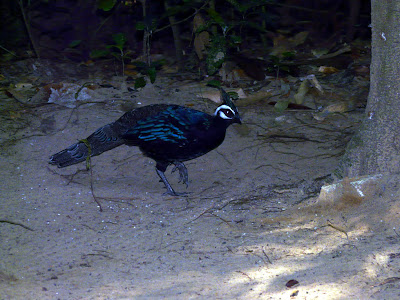
Palawan Peacock-Pheasant
 Palawan Hornbill

Dinner-time...!

Butterfly species

Perhaps not all it seems...
 The gang!
 An evening at Manila bay


Palawan Peacock-Pheasant
 Palawan Hornbill
Dinner-time...!

Butterfly species

Perhaps not all it seems...
 The gang!
 An evening at Manila bay
Thursday, 3 April 2008
Negros Oriental
Greetings from Dumaguete, Negros Oriental; somewhere just belw left centre of the main Philippine islands group. Just a filler for the moment to while away some time before I get back to the airport to fly back to Manila. I've finished off a rapid-fire birding trip round the three main islands in the Phils: Luzon, Palawan and Mindanao, and have spent a couple of days unsucessfully chasing Negros endemics. The four of us who were on the trip managed to see approximately 120 of the 170-odd endemic birds of the Philippines, which looks better when you consider that many of the unseen species are possibly extinct, restricted to islands we didn't visit, or found in inaccessible parts of those islands we did visit!
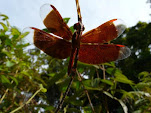
Not content with birds, I've managed to photograph a good selection of dragonflies and damselflies, some of which I have been able to identify already (hoorah!) and a hatful of butterflies, none of which I have been able to ID. Watch this space for further updates when I get back home... I'll publish some photos on here and a stack more on my website, space permitting.
Been a pleasant trip overall, with generally good food, nice enough people and fine weather (boy have I tanned up!), but with some significant frustrations as well - particularly the field guide to the birds of the Philippines. I shall explain at a later point!
Oh, and as for the previous post, yes, we saw Palawan Peacock-pheasant... Tres bon!
Not content with birds, I've managed to photograph a good selection of dragonflies and damselflies, some of which I have been able to identify already (hoorah!) and a hatful of butterflies, none of which I have been able to ID. Watch this space for further updates when I get back home... I'll publish some photos on here and a stack more on my website, space permitting.
Been a pleasant trip overall, with generally good food, nice enough people and fine weather (boy have I tanned up!), but with some significant frustrations as well - particularly the field guide to the birds of the Philippines. I shall explain at a later point!
Oh, and as for the previous post, yes, we saw Palawan Peacock-pheasant... Tres bon!
Sunday, 9 March 2008
Gone birdin'

As of tomorrow, I'm off in search of some of these, amongst others. Wish me luck...
Back sometime in April.
Tuesday, 26 February 2008
The Story of Stuff...
Whilst this is very North America-centric, it's a pretty interesting video - particularly around the 12-minute mark. It will take a while to load, even on ADSL, but it's worth watching, whether you'd agree with the message or not. I'm not trying to say I agree or disagree, merely that it's quite a comment on our society. Runs for about 20 minutes, so perhaps a coffee- or lunch-break fillum!
www.storyofstuff.com
www.storyofstuff.com
Long time no postings...
Seems like a long time since writing anything. Quick roundup: lots of Siskins ringed in the garden now: 48 and counting so far, with a very low retrap rate; suggesting plenty of birds moving through. Other local ringers have accounted for another 250-odd and no-one appears to have caught anyone else's bird as yet. Plenty of Siskins around, and all of a sudden. None of us are complaining!
Attended the Southwest Ringers' Conference in Exeter last Saturday, which was pretty good. A range of interesting talks, particularly about the use of ringing as a tool for conservation and monitoring as well as the chance to put a few names to faces and do some schmoozing...
Sunday found me attempting to ring in the garden, then when the weather caught up with me, finally giving in to the temptation to go and see Devon's first King Eider Somateria spectabilis. The bird is (at the time of writing) in North Devon, at the mouth of the Taw-Torridge estuary complex. It's not the best-looking, as it's a first-winter drake (should be S. unspectabilis, really!) , and the views I had would be comfortably described as atrocious, but it's my first new bird in the county for over a year. I didn't take any pictures, so if you want to see a similar bird, check out this link. The photos there are, would you believe, a tad better than the views I had, but it is 'just' a King Eider! The sweeping rain and biting north wind didn't help; nor did the fact that I'd packed only one glove... Otherwise the highlight was an interesting - leucistic? - Rook Corvus frugilegus, which I did photograph and post the obligatory cruddy picture below.

Here's another Rook looking thoroughly miserable in the grotty weather:

I had intended to get to Trew Plantation on the way back to search for Great Grey Shrike, but unaccountably couldn't find the site on my roadmap, so gave in and had a go for the one on Dartmoor instead. Inevitably I got there a touch late in the day and the presence of a noisy crowd of kiddiewinks didn't help. Great that they're thundering round the countryside and getting some quality exercise in, but it's a bit of a bummer when they trash your birding. Ah well... that's life. I did manage to find a smart male Dartford Warbler Sylvia undata before the kids got there! Rounded off the day with a pleasant sunset and a nice chat with a fellow birder who was also shrike-seeking. I was also slightly startled to see the quantity of frogspawn present at such a high point on the moors - some of it will inevitably be frozen and killed, but that also leaves more resources for the survivors. Life's a bitch...!
 Sunset at Warren House Inn
Attended the Southwest Ringers' Conference in Exeter last Saturday, which was pretty good. A range of interesting talks, particularly about the use of ringing as a tool for conservation and monitoring as well as the chance to put a few names to faces and do some schmoozing...
Sunday found me attempting to ring in the garden, then when the weather caught up with me, finally giving in to the temptation to go and see Devon's first King Eider Somateria spectabilis. The bird is (at the time of writing) in North Devon, at the mouth of the Taw-Torridge estuary complex. It's not the best-looking, as it's a first-winter drake (should be S. unspectabilis, really!) , and the views I had would be comfortably described as atrocious, but it's my first new bird in the county for over a year. I didn't take any pictures, so if you want to see a similar bird, check out this link. The photos there are, would you believe, a tad better than the views I had, but it is 'just' a King Eider! The sweeping rain and biting north wind didn't help; nor did the fact that I'd packed only one glove... Otherwise the highlight was an interesting - leucistic? - Rook Corvus frugilegus, which I did photograph and post the obligatory cruddy picture below.

Here's another Rook looking thoroughly miserable in the grotty weather:

I had intended to get to Trew Plantation on the way back to search for Great Grey Shrike, but unaccountably couldn't find the site on my roadmap, so gave in and had a go for the one on Dartmoor instead. Inevitably I got there a touch late in the day and the presence of a noisy crowd of kiddiewinks didn't help. Great that they're thundering round the countryside and getting some quality exercise in, but it's a bit of a bummer when they trash your birding. Ah well... that's life. I did manage to find a smart male Dartford Warbler Sylvia undata before the kids got there! Rounded off the day with a pleasant sunset and a nice chat with a fellow birder who was also shrike-seeking. I was also slightly startled to see the quantity of frogspawn present at such a high point on the moors - some of it will inevitably be frozen and killed, but that also leaves more resources for the survivors. Life's a bitch...!
 Sunset at Warren House Inn
Subscribe to:
Posts (Atom)