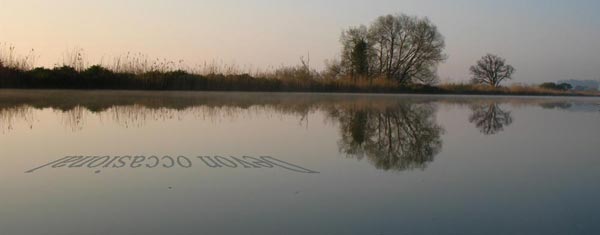
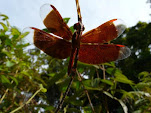
Spring is springing well and truly here in Devon. We've been up to our eyeballs and beyond in learning how to cope with an infant, and consequently not been out and about as much as once we would. Funny that.
Anyway, after a shockingly bad night's sleep, I left Na to sleep off her cold this afternoon and took young Sabina up through the woods to see what was happening in the world around us. After a bit of a cold snap over the past couple of days, it was nice to be out in warm weather. The birds have been triggered by the rising temperatures and longer days, so even though it was early afternoon the air was sweet with the songs of Blackbird, Robin, Mistle Thrush and Chaffinch, whilst Great and Blue Tits chucked in their two-pennorth (I just can't bring myself to describe their songs as 'sweet', though they're undeniably pleasant to hear).
Along the river we managed to find a Dipper singing and feeding in the riffles, so spent some time enjoying the sight of him wading energetically into the water, ducking down to search for invertebrates, then shrugging under the surface for a moment, only to reappear close by - either bobbing along the stones in the same unhurried fashion, or, in the deeper patches, popping to the surface like a cork and swimming along for a brief moment before flying to a nearby rock.
 |
| Argh! Not another walk! Why do you do this to me? |
 |
| The river Bovey at Parke |
The floor of the woods is a rapidly burgeoning carpet of green, as
Pignut, Celandine, Dog's-mercury and Primrose surge into leaf, with the
arrowhead leaves of Cuckoo-pint emerging in glossy, spiky clumps here
and there. You could generally be forgiven for wondering why they are
called
Arum maculatum, until every so often you come across an
absolute beauty with deep purple blotches sprayed across the rich green
gloss of the leaves. It won't be long before the flowers emerge with
their pale greenish-white bracts hooding the flower-spike.
 |
| Pignut (feathery leaves), Wild Strawberry (trefoil leaves), Lesser Celandine (heart-shaped leaves) claiming the open soil for the early part of the season. |
 |
| Beech trunk covered with mosses (mainly Hypnum andoi) and lichens |
The bulk of the green in the ground layer is still found in the ferns
and mosses though; it's still somewhat surprising to realise how many
species are involved in a reasonably varied bit of woodland here: testament to the generally moist climate we live in here.
 |
| Primroses; a splash of delicate colour to welcome the warmer weather in. |
 |
| Another of the species making up the carpet: Wild Garlic, or Ramsons |
 |
| Cuckoo-pint deserving the name 'maculatum' |
 |
| Red-flushed ivy leaves on a post along the old railway line |
 |
| Polypody, one of the commoner ferns in this part of the world; but which species? Difficult without a microscope, but perhaps Polypodium interjectum and P. vulgare - or more likely a hybrid between the two! |
 |
| Polypody doing a semi-passable impression of Hard Fern |
Above
the green field layer the Hazels are already flowering, sprays of
catkins covering most of the trees, and the first of the young Sycamores
and Elders are bursting into leaf. Above these shrubby trees, the
canopy trees proper are still tightly bound into bud, and we spent a
while looking at the various patterns and colours of the shoot tips
(reassuring myself that I can still identify them in their dormant
state!).
 |
| The old railway line through Parke, glowing in the afternoon sun with Dog's-mercury along the sides of the track. |